How to Solve Sort Puzzles: Tips That Work in Water, Ball and Conveyor Sort Games
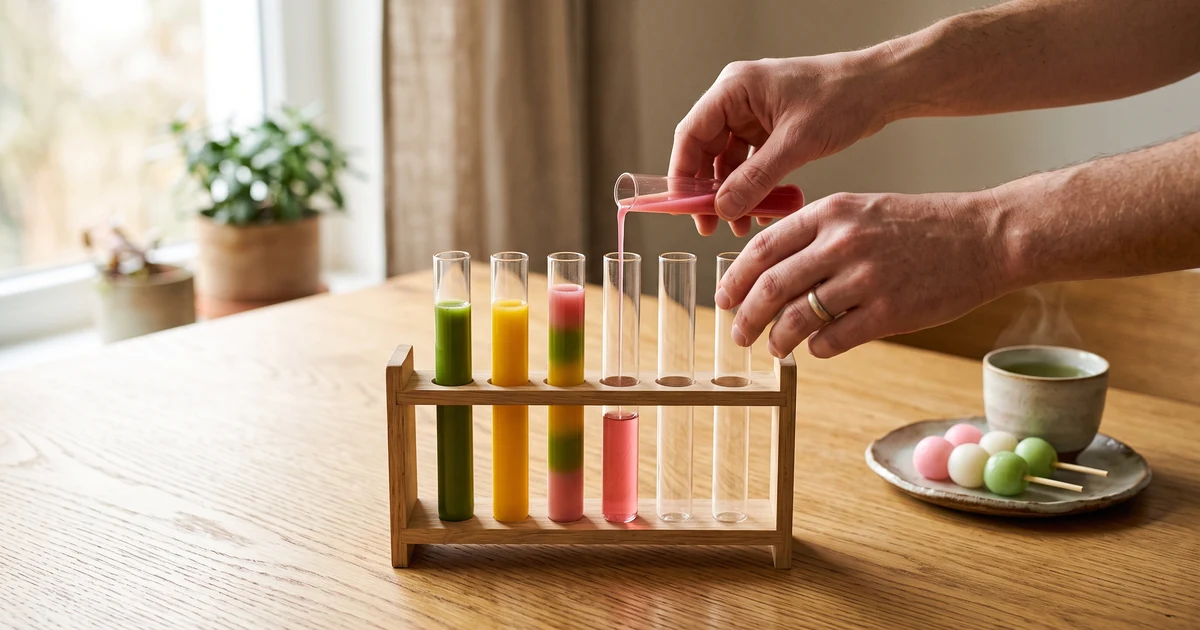
Most stuck sort puzzles are a space problem, not a color problem. When you pour water, move balls or feed a conveyor belt, the losing move is almost always the one that fills your last free tube or seat. The water sort puzzle tips that hold up across games all start there. Read the whole board first, make or keep one empty tube, finish one color at a time, and before every move ask what it leaves open. When you stall, a clean restart with a plan beats undoing at random. The rest of this guide shows why that works, how it carries over to ball sorts and belt sorts, and what to check before each move.
Why sort puzzles get stuck: space, not colors
Every sort game you have played shares the same three rules. Each container should end up holding one color. A piece can only go onto a matching color or into an empty container. And every container has a fixed capacity, so a full tube accepts nothing.
Those rules make empty capacity the scarce resource. Colors never run out; room does. Many levels start you with very little empty room and a pile of mixed tubes. Each move either creates room, keeps it level or spends it. A player who loses has usually spent the last free tube on a pour that looked tidy but opened nothing.
The good news is that water and ball sorts are the same puzzle underneath. Takehiro Ito and nine coauthors studied both versions in Sorting Balls and Water: Equivalence and Computational Complexity. They proved that an instance is sortable with ball moves if and only if it is sortable with water moves. Pouring a whole run of one color or lifting one ball at a time changes how many moves you make, not whether a solution exists. That is why one method works for both.
So stop asking which color to fix next and start asking where your next empty space will come from. Most color sort puzzle levels fall apart the moment you lose track of that.
Read the board before your first move
Count what you have
Before you touch anything, count three things. How many colors are there? How many tubes are empty or nearly empty? And how deep is each color buried? A color that sits on top of three tubes is easy to gather. A color that sits at the bottom of several tubes needs everything above it cleared first, and that takes room you may not have yet.
That buried color is your hardest one. Plan for it first, even if you finish it last. Ask which tubes you will need to empty to reach it, and in what order.
Find the easy finish
Next, look for the quick win. A tube that holds three layers of one color with a single wrong piece on top is close to done. A color that shows on top of two or three tubes can often be gathered in a couple of moves. These easy finishes matter because a completed tube is out of the game. It stops asking for space, and the empty tube you used to build it can go back to work.
Thirty seconds of looking saves a lot of pouring. Skip it, and you can spend twenty moves undoing a plan you never had.
Water sort puzzle tips that work on almost any level
If you keep asking how to solve water sort puzzles that beat you every time, these are the habits to build. None of these water sort puzzle tips and tricks is a secret. Each one is the space rule applied one move at a time.
- Make an empty tube early and keep it as a buffer, even if that costs a few extra moves.
- Finish one color before you start the next, so every full tube is a tube you can forget.
- Never pour onto a tube that you will need to open again soon.
- Avoid splitting one color across two tubes, because both tubes then wait for the same pieces.
- Prefer the move that uncovers a new color over the move that only looks neat.
A Gamezebo strategy guide to Water Sort Puzzle puts the core rule plainly: you can't mix the colors, and a tube only fills to a set level. The same guide gives the buffer tip almost word for word, saying that if a move will give you an empty glass, you should always take it. It also tells you to think about what a pour will leave you with before you make it, which is the habit this whole method rests on.
That guide covers one app, where you get five undos per level. Undo limits differ from game to game, and some games have no undo at all. So a water sort puzzle strategy that leans on undo is fragile. Build your plan so you rarely need it.
How to solve ball sort puzzles: same rules, one ball at a time
If you want to know how to solve ball sort puzzle levels, start with the result above: the rules match water sort, and so does the strategy. The difference is tempo. In water sort, one pour moves the whole run of one color on top, as far as there is room. In ball sort, each move lifts a single ball, so the same plan takes more moves to carry out.
That extra step changes one habit. The empty tube is a parking spot for one color, not a dumping ground. When you start dropping mixed balls into it to dig something out, you turn your only free tube into another mixed one. Pick a color, park it there, and move on.
The other trap is aimless shuffling. Because single moves feel cheap, it is tempting to move a ball back and forth while you think. Every one of those moves spends attention, and in games that count your moves it can cost you the best result. Plan two or three moves ahead, then act.
A useful test: before each move, name the tube it will free or the color it will finish. If you cannot name either, it is probably a shuffle. And remember that Ito and his coauthors showed the ball and water versions are solvable in exactly the same cases, so a stuck ball sort board is a space problem too.
Conveyor sorts: the belt is your empty tube
Conveyor sort games look different, but the logic is the same. In the usual version, you tap a container and its pieces drop onto a moving belt with a limited number of seats. Matching pieces leave the belt for targets that each take three of a kind. If the belt fills with pieces that have nowhere to go, the attempt ends.
Here the free seats on the belt play the role of the empty tube. Every tap spends seats, and every finished target gives some back. The method carries straight over.
- Count the free seats on the belt before every tap.
- Feed the targets at the front of the line instead of tapping the biggest container.
- Save large pours for a moment when the belt is nearly empty.
- Plan which targets finish first, because locks and counters often depend on that order.
This variant is growing. In a February 2026 analysis, Deconstructor of Fun described the sort market as having been essentially a one-trick pony: Water Sort. The writer then picked conveyor-based puzzles, with a belt looping around a picture, as the mechanic to bet on for hybridcasual puzzles in 2026. According to AppMagic data reported by Mobidictum, sort puzzles overtook blast games at the start of 2026 to become the third-largest puzzle subgenre by in-app purchase revenue.
Mochirama, our own game, is one of these conveyor sorts. You tap a bamboo steamer, all its mochi pour onto the belt at once, and matching flavors slide into the waiting plate, three to a plate. The plate closest to finishing fills first, and if the belt fills up, service stops. There is no timer, so you can think between taps. You can try the belt in your browser on our home page.
When you are truly stuck
Sometimes no move looks good. That is the moment to stop pouring, not to try harder.
First, restart with a plan instead of undoing at random. Stepping back one move at a time tends to walk you into the same dead end, because the real mistake usually happened several moves earlier. A restart lets you use what the failed attempt taught you: which color was buried, and which tube you filled too soon.
Second, step away for a few minutes. Research on problem solving supports the break. A meta-analysis by Sio and Ormerod in Psychological Bulletin identified a positive incubation effect, meaning that setting a problem aside for a while helped people solve it. Longer preparation periods gave a greater effect, so the break works best after you have studied the board properly. Those studies used insight and creative thinking tasks, not sort puzzles, but the habit carries over.
Last, a word on solvability. Not every sort board can be solved, and Ito and his coauthors showed that deciding which ones can is NP-complete. A team at Johannes Gutenberg University Mainz studied a close relative of ball sort and showed that finding the fewest moves is NP-hard. In plain terms, no known shortcut finds the perfect move count, so do not chase one. Whether a given level has a solution depends on the game. Mochirama checks that every level has a solution, and a retry never costs a life.
A quick checklist before every move
When you are mid-level and unsure, run through these sort puzzle tips in order. They take a few seconds and catch most bad moves.
- Ask what this move leaves open once it is done.
- Check whether it fills your last free tube or belt seat.
- Make sure it brings at least one color closer to finished.
- Look for a color you will need soon that this move would bury.
- Prefer any move that frees a container over one that only tidies.
- If no move passes these checks, restart with a plan instead of guessing.
That is the whole method: protect your space, finish colors one at a time, and think one move past the one you are making. It works on water tubes, ball stacks and conveyor belts alike, because underneath they share the same rules. You will find more sort puzzle notes on the Mochirama blog.
FAQ
Is there a trick to water sort puzzles?
The closest thing to a trick is protecting your empty space. Keep at least one empty tube for as long as you can, finish one color at a time, and check what each pour leaves open before you make it. Most stuck levels come from spending the last free tube too early.
How do you solve a ball sort puzzle when you run out of moves?
Stop and look for any move that frees a tube, even if it does not finish a color. If there is none, restart with a plan rather than shuffling balls back and forth. On the next attempt, keep one tube empty longer and clear the tubes above your most buried color first.
Should I use undo or restart the level?
Undo helps when you spot the mistake right away, one or two moves back. When the real error happened much earlier, a restart is usually faster, because undoing step by step tends to lead to the same dead end. Some games limit undos and some have none, so a plan that does not depend on them is safer.
Do water sort tips work in conveyor sort games?
Yes, with one change. In a conveyor sort the free seats on the belt act as your empty tube, so you count seats before each tap and feed the targets closest to finishing. Guarding space and finishing one color at a time carry over directly.
Does every sort puzzle level have a solution?
Not in general. Researchers have shown that some sort puzzle boards cannot be solved, and whether a level is solvable depends on how the game builds it. Mochirama checks every one of its levels for a solution before it ships.